


A scientifically grounded approach to phosphorus management in lakes, reservoirs and urban waters
TL;DR
- Excess phosphorus remains one of the most significant pressures on lakes, reservoirs and urban waters worldwide.
- Both external inputs and historic sediment stores contribute to long-term water quality challenges.
- Phoslock® is a lanthanum-modified bentonite developed by CSIRO to bind free reactive phosphorus in water and sediment.
- Independent research and regulatory reviews confirm a strong safety profile and long-term stability.
- Large-scale projects, including Kralingse Plas (Rotterdam), demonstrate measurable and sustained reductions in phosphorus concentrations.

The challenge: phosphorus enrichment and water quality pressures
Across Europe and globally, water managers continue to face complex nutrient pressures. Phosphorus enrichment remains a primary driver of eutrophication in freshwater systems.
Elevated phosphorus concentrations — from both catchment inputs and historic sediment accumulation — contribute to:
- Declining chemical water quality
- Reduced water clarity
- Internal phosphorus loading from sediments
- Increased risk of algal blooms and harmful algal blooms (HABs), including cyanobacteria
- Ongoing management costs and regulatory pressure
Addressing phosphorus at its source and within sediments is therefore central to modern water quality strategies under frameworks such as the EU Water Framework Directive.
From scientific concept to practical phosphorus management tool
Phoslock® was developed in the late 1990s by the Commonwealth Scientific and Industrial Research Organisation (CSIRO) in Australia and has been commercially applied since 2001.
The technology is based on lanthanum-modified bentonite (LMB). Lanthanum, a naturally occurring rare earth element, is integrated into a bentonite clay matrix.
When applied to water:
- Lanthanum binds with free reactive phosphorus
- An insoluble mineral (rhabdophane) is formed
- The bound phosphorus becomes non-bioavailable
- Binding occurs across the full pH range
- Activity continues in both the water column and at the sediment–water interface until available lanthanum is exhausted
Unlike some alternative technologies, the material does not degrade over time and has no shelf life limitations, either in storage or following application.
Since its introduction, Phoslock® has been applied in public reservoirs, protected nature sites and urban lakes across multiple continents.
Safety and regulatory assurance
Independent laboratories and regulatory authorities across Europe and internationally have extensively assessed the composition and environmental behaviour of Phoslock®.
Findings from published studies and monitoring programmes show that:
- The product is non-toxic to aquatic organisms
- It does not alter pH
- It does not generate secondary contamination in water or sediment
- The bound phosphorus remains stable long term
Phoslock® is not a pesticide and is not subject to registration under FIFRA, based on the US EPA determination following review of materials received on 19 August 2011.
As Damian Whelan, General Manager Europe, explains:
“We place great value on independent testing and ongoing monitoring. The safety profile of Phoslock® is supported by a wide range of applications and hundreds of peer-reviewed publications. Transparency and trust are essential for everyone involved in water management.”
The technology is also referenced in the international research initiative Our Phosphorus Future, which highlights engineered solutions for global nutrient management.
Measurable performance in the field
Monitoring data from projects in the United Kingdom, the Netherlands, Belgium, Germany and Scandinavia demonstrate rapid and significant reductions in soluble reactive phosphorus and total phosphorus concentrations following application.
Results typically show:
- Measurable decreases in phosphorus concentrations within days
- Reduced sediment phosphorus flux
- Improved chemical status under Water Framework Directive metrics
- Sustained performance dependent on local conditions and external loading
Phoslock® can be deployed for targeted interventions or integrated into long-term phosphorus management programmes. Project design is based on site-specific assessment of hydrology, sediment chemistry and phosphorus budgets.
Case study: Kralingse Plas, Rotterdam
A leading European example is Kralingse Plas, an urban lake in Rotterdam.
For many years, the lake experienced persistent phosphorus enrichment from both sediment stores and catchment inputs. In 2021, in collaboration with the municipality of Rotterdam, the regional water authority Hoogheemraadschap van Schieland en de Krimpenerwaard, academic partners and the local community, a large-scale and tailored Phoslock® application was undertaken — one of the largest such projects in Europe.
Independent monitoring indicates:
- Strong and sustained reductions in phosphorus concentrations
- Improved water clarity
- Continued low phosphorus levels four years post-application without re-treatment
Damian Whelan reflects:
“The Rotterdam project was a genuine milestone. It demonstrated how this technology can be applied at scale in a transparent and collaborative way. Four years later, levels remain very low, and residents still tell me how much they value being able to use and enjoy their lake again.”
The project is now referenced by other municipalities seeking cost-effective phosphorus management without major infrastructure works.
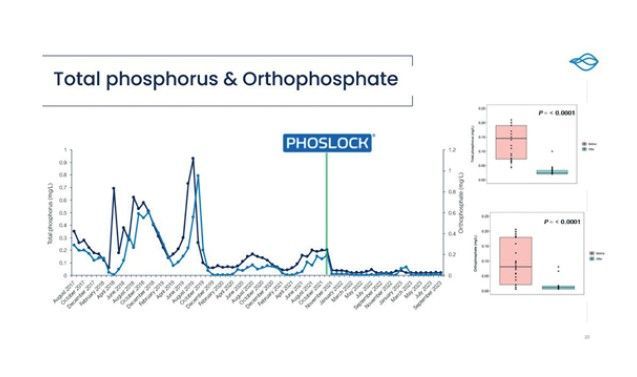
The concentrations of phosphorus and orthophosphate in Kralingse Plas decreased significantly following the application of Phoslock®.
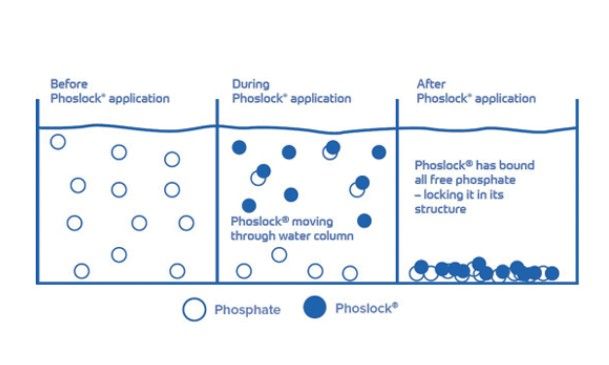
Phoslock® permanently binds phosphate across the full pH range, so that it is no longer available in the water column or in sediments.
Global experience, locally tailored solutions
Phoslock® has been applied across Europe, Australia, North and South America, and China. It has also been used in high-profile projects such as the London 2012 Olympic Games and the Glasgow 2014 Commonwealth Games.
Each site requires:
- Detailed water chemistry assessment
- Sediment phosphorus evaluation
- Consideration of hydrological conditions
- Alignment with regulatory frameworks
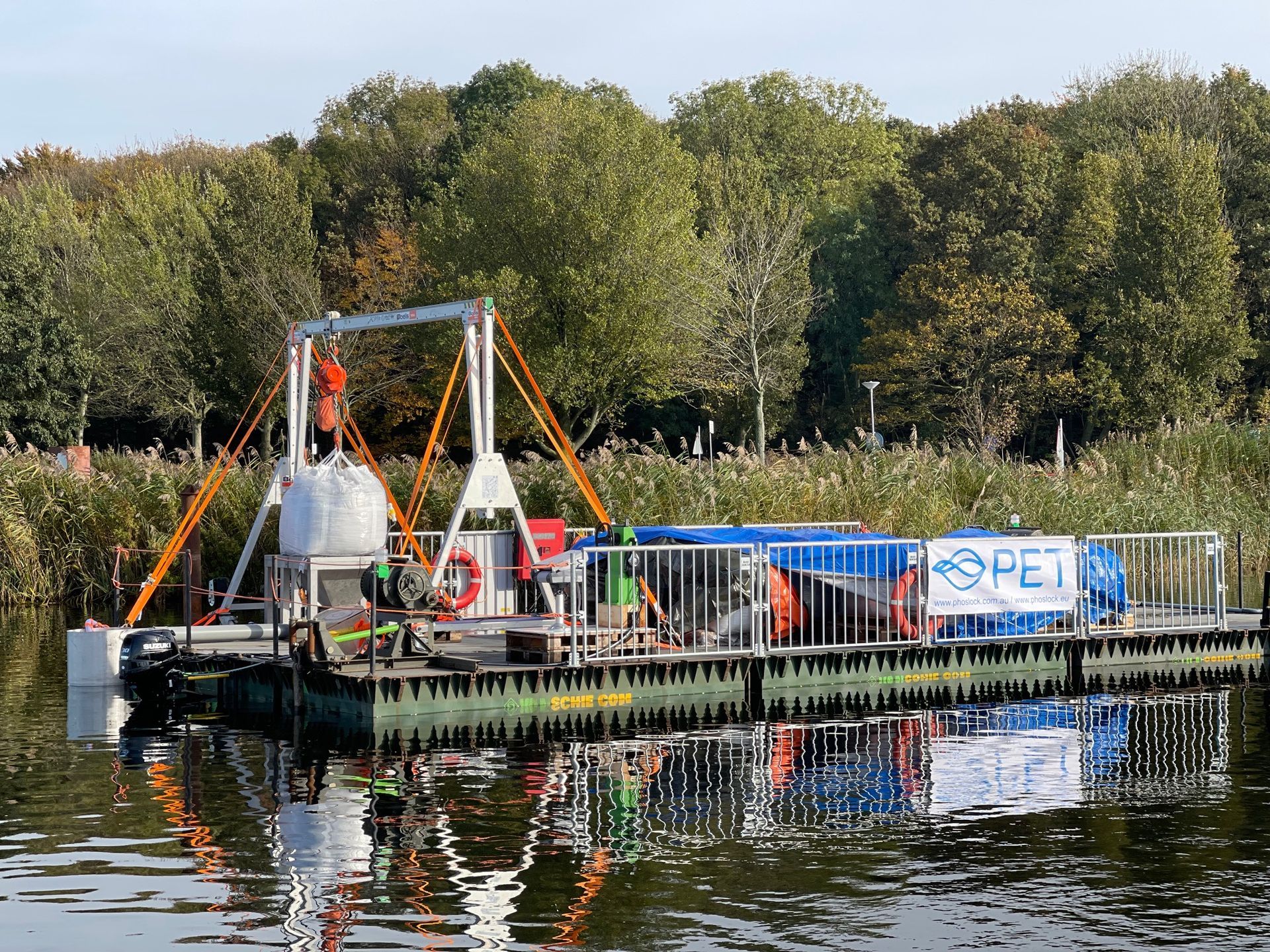
Application can be undertaken using standard water management equipment, with minimal operational disruption. Technical support is provided throughout planning, dosing calculation, deployment and post-application monitoring.
Phosphorus management as a foundation for resilient waters
Controlling excess phosphorus is a critical step in addressing eutrophication pressures and improving long-term water quality metrics.
By targeting free reactive phosphorus in both the water column and sediments, Phoslock® provides water managers with a scientifically validated tool that can be integrated into wider catchment and nutrient management strategies.
For municipalities, utilities, consultants and private water owners seeking:
- Sustainable phosphorus control
- Reduced internal loading
- Regulatory compliance support
- Transparent, independently supported performance data
Phoslock® represents a proven and practical option.
Technical documentation and further information
For detailed technical papers, safety assessments, case studies or site-specific consultations, please contact the Phoslock® Europe team.
Collaboration, transparency and evidence-based decision-making remain central to delivering resilient water bodies for future generations.
Share this article







 by
by