
Hem

Restaurering av förorenade vattenförekomster med Phoslock

"Vårt mål är att förbättra vattenkvalitet jorden runt."

Phoslock Europe GmbH är ett helägd dotterbolag av Phoslock Environmental Technologies (PET) i Melbourne, Australien.


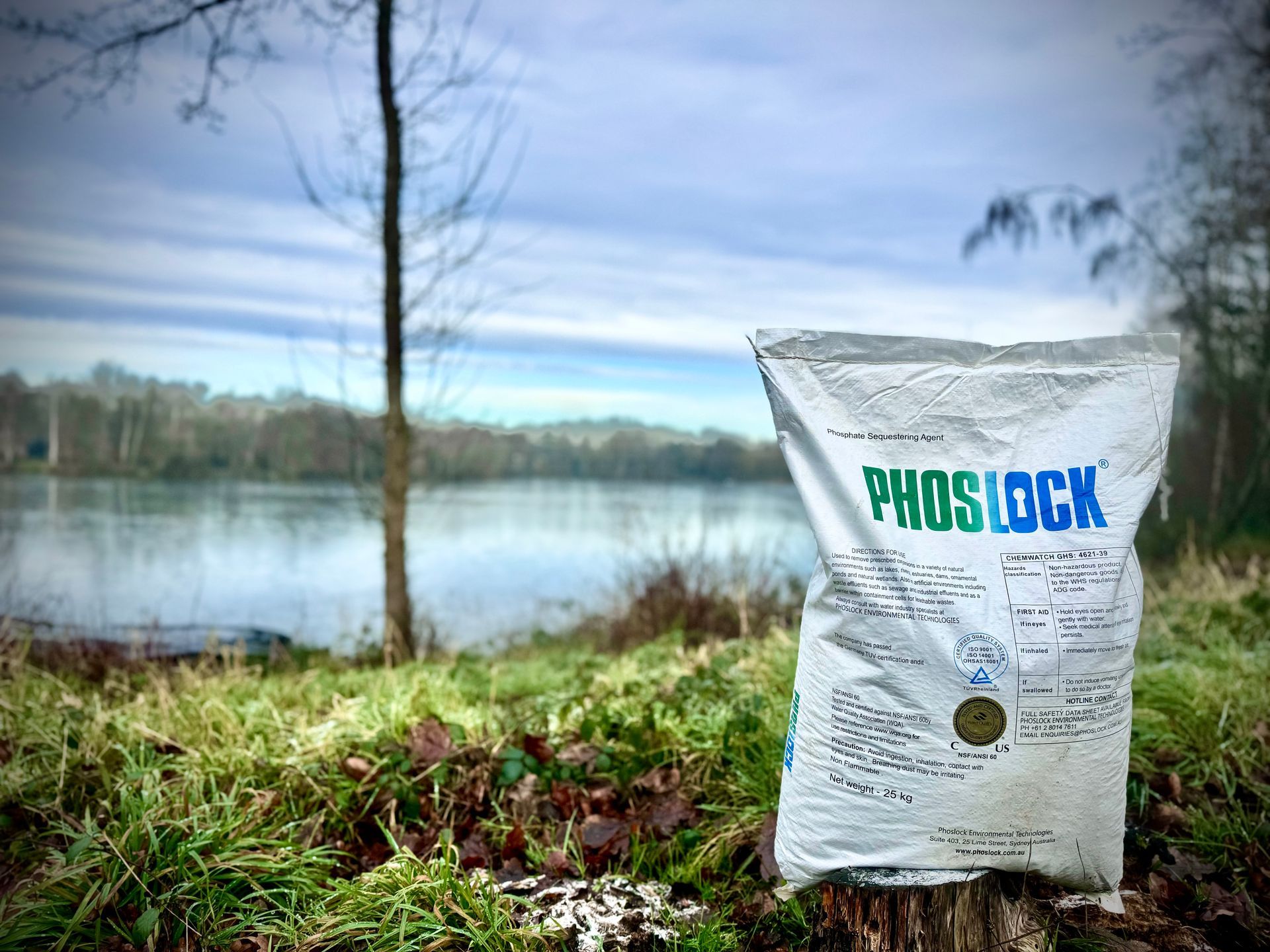
PET är tillverkaren och IP-ägaren av Phoslock, ett fosfatbindande lermaterial utvecklat av Australienska CSIRO på 90-talet.

Vad är Phoslock?

Phoslock utvecklades i Australien av Commonwealth Scientific and Industrial Research Organisation (CSIRO) för fastläggandet av fosfat från vatten. Det aktiva ämnet i Phoslock är lantan (en sällsynt jordartsmetall) som har hög affinitet för att binda fosfat.

Fallstudier

Phoslock har framgångsrikt använts i över 300 vattenförekomster runt om världen

Här hittar ni ett urval av detaljerade fallstudier med beskrivning av projekten tillsammans med bilder och filmklipp.

Dokument och publikationer

En serie vägledningar och hjälpblad samt en publikationslista och länkar

Miljöcertifieringar

Certifierad enligt NSF/ANSI 60 i USA och Kanada

Certifierad enligt Chinese Research Academy of Environmental Sciences (CRAES)

FILMKLIPP

SENASTE NYHETER

By BBC News - Science & Environment 02 Dec, 2020
Let us not ignore the significance of all the ponds, ditches and streams say a group of 20 scientists to the UK government's 'Natural Capital' committee
By Phoslock Europe 26 Oct, 2020
Nearly 11 years after being treated, the Behlendorfer See near the city of Lübeck in Northern Germany is still reaping the benefits of Phoslock. The 63ha, 15m deep lake, which received a single treatment in 2009, had suffered from nutrient enrichment for many years from its predominantly agricultural catchment. As a result, the lake experienced regular blue-green algal blooms which led to a reduced aquatic plant community. Consequently, the lake was not meeting European legislation for ‘good ecological status’ outlined by the Water Framework Directive (WFD).  Several catchment management measures were initiated to help improve its water quality. However, the impact of years’ worth of nutrients entering the lake had taken its toll and the lake failed to recover due to ongoing release of phosphorus from the lake sediments, a process called internal loading. A Phoslock application of 214 tonnes was applied in in December 2009 to an area of approximately 40ha which was deeper than 7m.
By Phoslock Europe 19 Oct, 2020
After four years of regular Phoslock applications, Lake Pampulha is showing promising water quality improvements. Lake Pampulha is a tourist hotspot which lies in southeastern Brazil within the urban area of one of Brazil’s largest cities, Belo Horizonte. Since the 1970s, urbanization has led to a decline in its water quality making the system very nutrient-rich. This UNESCO world heritage site has experienced regular cyanobacterial blooms since the 1980s due to nutrients entering the system. The lake was historically used as a water supply reservoir for the City of Belo Horizonte, however the use of the reservoir for potable water supply was stopped some years ago due to the ongoing issues with cyanobacterial blooms.
By Phoslock Europe 14 Oct, 2020
Shifting low clouds reveal the majestic backdrop to the Völser Weiher
algal blooms
By Phoslock Europe 04 Sep, 2020
A new report out by the Environmental Working Group (EWG) focusses attention on the reporting of over 300 algal blooms in the US so far this year and warns people heading out over the Labour Day weekend to be aware of potentially toxic algal blooms. Whilst official figures show the number of reported blooms as lower than the same time last year this is largely thought to be due to the lack of monitoring taking place during the Coronavirus crisis. This report has also been picked up by the UK’s Daily Mail. Read their full article here . As Phoslock Environmental Technologies continues to steadily expand its’ projects across the globe with the backing of solid, proven scientific results of our product, we aim to become a ‘go to’ choice for water authorities and lake & reservoir managers who seek to combat this ever increasing issue of lake eutrophication. A rising population, the subsequent urban growth and agricultural demand, together with climate change all in some way directly or indirectly affect the world’s water supply. We need to take care of it. Phoslock removes excess phosphorus from aquatic systems, thereby improving water quality. Elevated concentrations of phosphorus are the primary cause of undesirable changes to lake ecosystems, including the loss of aquatic plants and the increased incidence and severity of blue-green algal blooms. Read more here .
By Mail on Sunday 16 Aug, 2020
…so says Griff Rhys Jones, one of Britain’s best loved comedians, television presenters and nature lovers in a recent article written for the Mail on Sunday about the deteriorating state of Britain’s waterways. Read the full article here published in the Mail on Sunday (16th August 2020)
By Phoslock Europe 06 Aug, 2020
Trials are currently taking place on Utah Lake (surface area 38,445 hectares), one of the largest natural freshwater lakes in the western United States, to address the recurring problem of blue-green algae. SePRO Corporation and Aqua Technex under the direction of the Utah Lake Commission and partners, are working together to demonstrate technologies (including Phoslock) that could help the lake’s recovery.
By Phoslock Europe 17 Jul, 2020
The largest freshwater body in New Jersey just 40 miles northwest of Manhattan, NYC, Hopatcong Lake suffered large-scale and persistent HABs (Harmful Algal Blooms) over the course of the 2019 summer season resulting in the closing of all beaches, creating significant negative impacts on the ecological, recreational, and economic resources of the lake.
Visa fler artiklar

Vi har utfört fler än 300 vattenbehandlingsprojekt över hela Europa och världen


För mer information om behandling med Phoslock eller för att starta ett samtal om behandling av din sjö, reservoar eller kanal, var vänlig kontakta oss. Då det är lämpligt skickar vi er förfrågan till en lokal licensierad distributör.

Share by: