


Aquatic Solutions UK Introduces a New Application Tool for Lanthanum-Modified Clay
TL;DR
- Aquatic Solutions UK has developed a new application tool to support accurate placement of lanthanum-modified clay during lake and pond projects.
- The system is designed to improve dose control, distribution consistency, and safe operation across varied site conditions.
- High-quality application supports reliable phosphorus-binding work, with attention to even coverage, controlled release, and minimal sediment disturbance.
- The new tool integrates with existing machinery and is suitable for both open water and shallow, sensitive locations.
- Phoslock welcomes this advancement as part of wider sector efforts to improve freshwater management through sound phosphorus chemistry and well-documented field practice.
Effective phosphorus management remains a central objective for organisations responsible for lakes, reservoirs, and ponds across the United Kingdom. As many water bodies experience long-term nutrient enrichment/pollution, interest in safe, precise, reliable, and environmentally responsible treatment tools continues to grow.
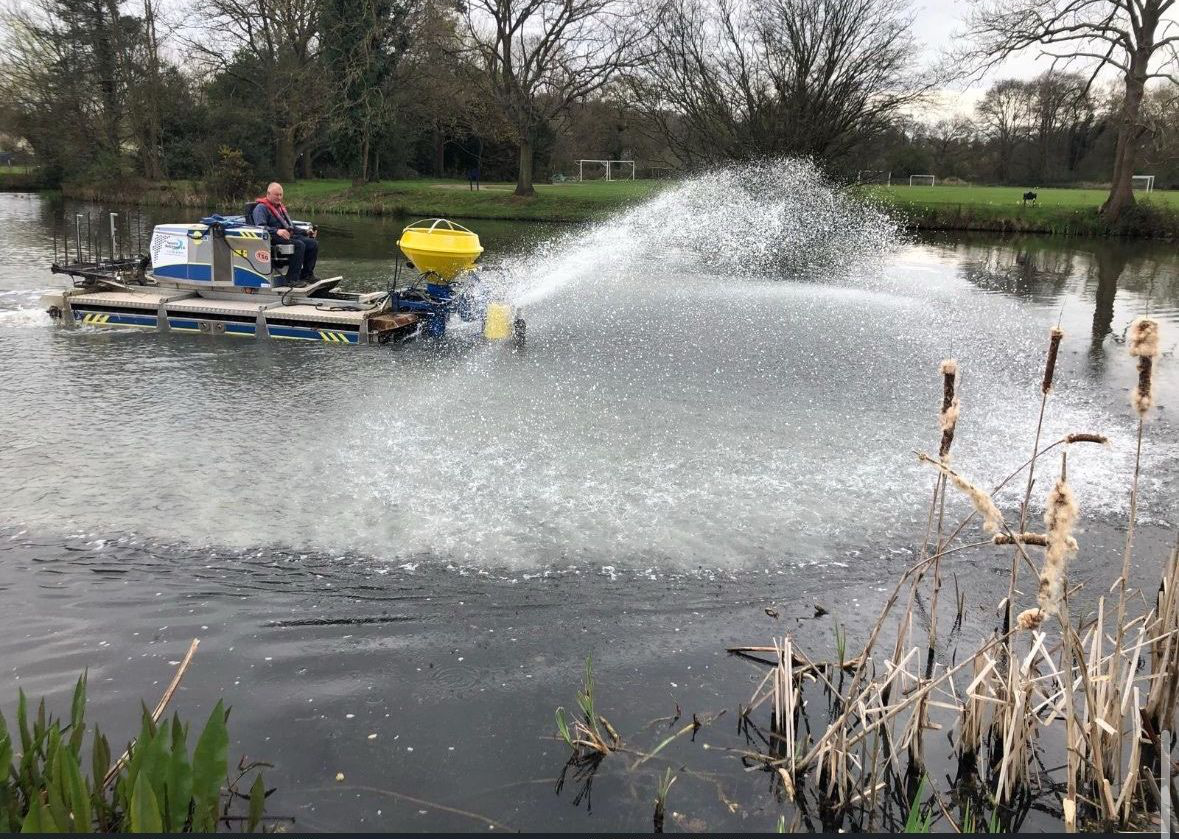
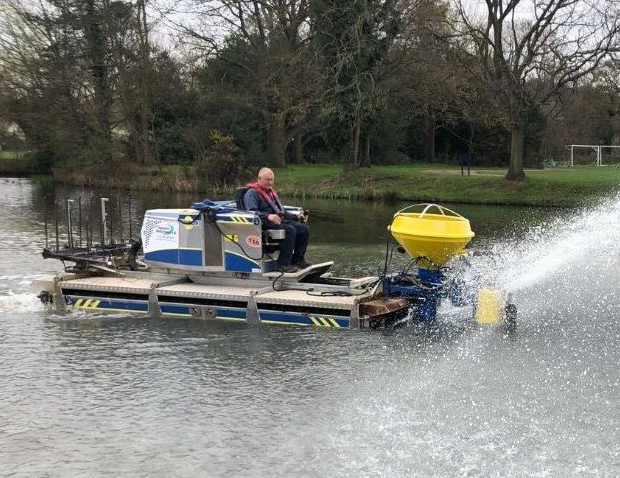
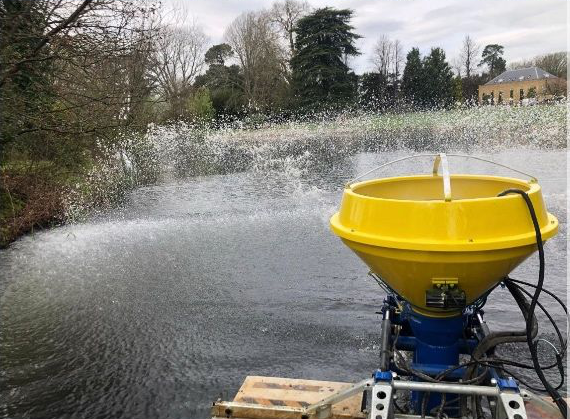
Aquatic Solutions UK has developed a new in-house application system designed to support accurate and efficient placement of lanthanum-modified clay during lake and pond remediation projects. The tool has been engineered, tested, and refined by their technical team to improve dose accuracy, support consistent distribution, and operate safely across a range of site conditions.
Phoslock EU welcomes this development, which reflects the growing attention across the sector to high-quality treatment delivery and repeatable field performance.

Supporting High-Quality Phosphorus Reduction Projects
Lanthanum-modified clay is used internationally to bind free reactive phosphorus in the water column and at the sediment–water interface. When applied at the correct dose and under the appropriate conditions, this binding forms a stable, inert mineral that helps water managers meet long-term phosphorus targets and support broader eutrophication-management programmes.
Application quality plays a meaningful role in project outcomes. Key considerations routinely include:
- Even distribution across the treatment area
- Prevention of localised over- or under-dosing
- Controlled release rates
- Adaptability to varying water depths and site access
- Minimal disturbance to sediments
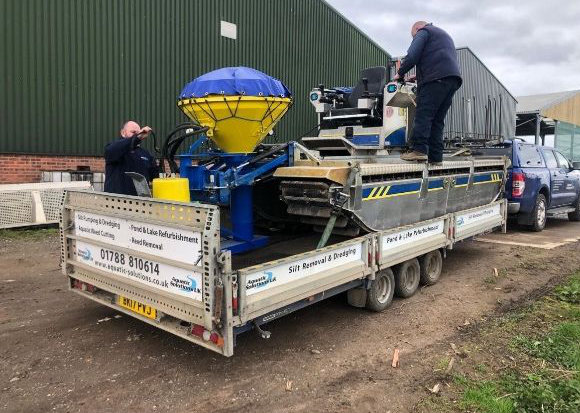
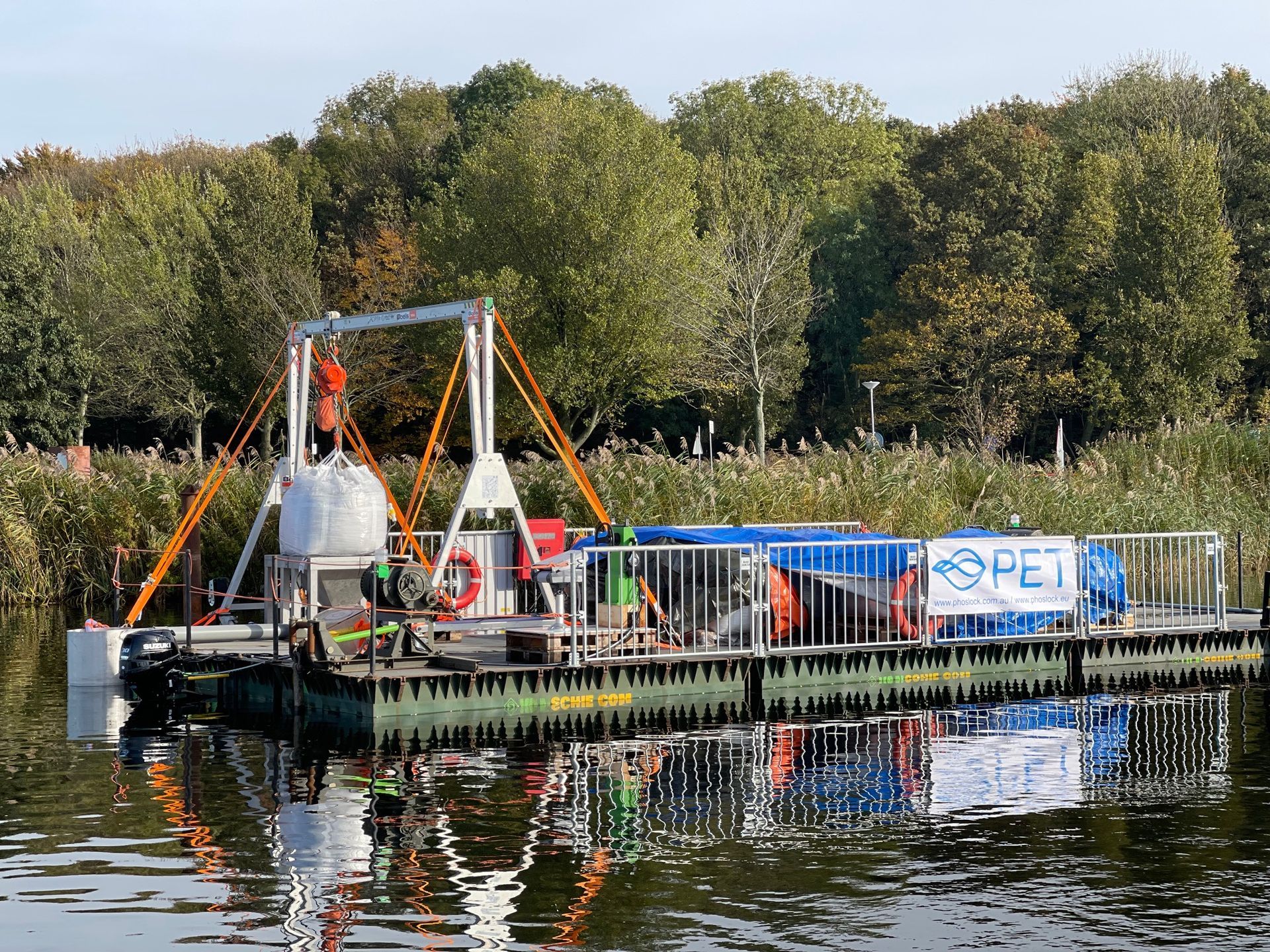
Aquatic Solutions UK’s new tool aims to address these operational needs through a controlled delivery mechanism that integrates with their amphibious work platforms.
Engineering Features of the New Tool
While the full design details remain proprietary, the new system introduced by Aquatic Solutions UK demonstrates several practical advantages for phosphorus-binding projects:
- Improved control of application rates
- Enhanced stability during deployment in open water and nearshore zones
- Compatibility with shallow or sensitive locations such as golf courses, nature reserves, and public parks
- Integration with existing site machinery, reducing mobilisation times
The video released on their YouTube channel documents the tool in operation and provides an overview of its mechanical configuration.
A Long-Standing Collaboration
Aquatic Solutions UK has worked with lanthanum-modified clay for several years and delivers projects ranging from small ornamental ponds to large reservoirs. Their teams have extensive experience in sediment management, water-quality restoration works, and mechanical interventions such as reed cutting, weed removal using approved herbicides where appropriate, silt pumping, and dredging.
Their continued investment in specialised equipment reflects a shared commitment across the sector to high-quality freshwater management and improved environmental outcomes for communities and landowners.
Phoslock recognises the dedication of practitioners who continuously refine field techniques to support reliable water-quality improvements. Tools of this nature contribute to safer operations, greater dosing precision, and better documentation of remediation processes.
Looking Ahead
As water managers work to address nutrient pressures across the UK’s freshwater environments, the combination of sound phosphorus chemistry, accurate application, and long-term monitoring remains essential. Developments such as the new application system from Aquatic Solutions UK provide practical support to teams delivering complex fieldwork under diverse conditions.
Phoslock looks forward to ongoing collaboration with partners who share a commitment to responsible freshwater stewardship and the advancement of practical water-quality solutions.
Share this article





 by
by